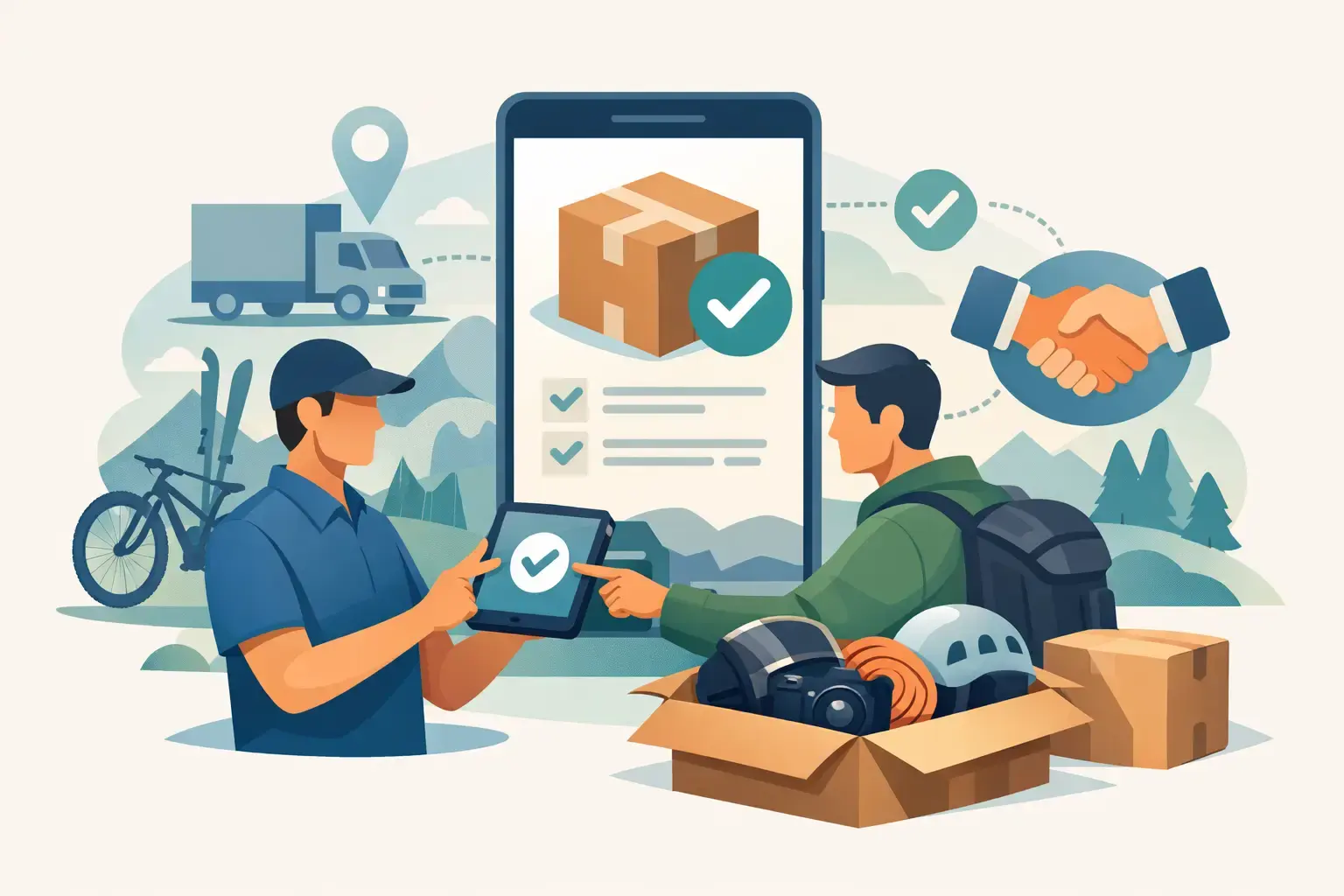
Delivery Confirmation for Gear Trades
Published on May 24, 2026You shipped a pedal. The other person says their synth is on the way. Then tracking stalls, messages get slower, and the whole trade starts to feel like a gamble. That is exactly why delivery confirmation for gear trades matters. When a swap depends on two strangers each doing their part, proof of delivery is not a nice extra. It is one of the basics that keeps a trade fair.
Why delivery confirmation for gear trades matters
A gear trade is different from a standard sale. In a sale, money usually flows one way and the item goes the other. In a trade, both sides are sending value. That doubles the number of ways things can go sideways.
Without delivery confirmation, a trade can get messy fast. One person claims the package never arrived. Another says it was dropped off but left unattended. Sometimes the tracking page shows delivered, but the box landed at a mailroom, front desk, or neighbor’s porch. Other times, the item arrives but the other trader goes quiet before acknowledging it.
Delivery confirmation creates a shared checkpoint. It answers a simple question: did the package reach the destination tied to the trade? That matters for trust, for timing, and for any dispute process that comes after.
For musicians, this is especially important because gear is rarely generic. A used Jazzmaster with aftermarket pickups, a discontinued pedal, or a vintage snare is not easy to replace. If something goes wrong, it is not just about dollar value. It is about losing a specific piece of your setup.
What delivery confirmation actually proves
Delivery confirmation is often misunderstood. It does not prove that the item was packed correctly. It does not prove that the gear inside matched the listing. And it does not always prove that the intended person physically took possession of the box.
What it does prove is narrower, but still very useful. It shows that a carrier recorded delivery to the address on file, usually with a timestamp and tracking event. In some cases, it may also include a signature or photo.
That distinction matters because a lot of trade problems happen in the gray area between shipped and received. Delivery confirmation helps close that gap. It gives both sides a verifiable milestone instead of relying on screenshots, vague promises, or a message that says, “yeah, it should be there.”
Why basic tracking is not always enough
Tracking helps, but basic tracking alone can leave room for arguments. A package can show movement without showing final delivery. It can show delivered without saying where it was left. It can also update late, which causes panic when one trader thinks the other is stalling.
For lower-value accessories, that may be manageable. For a trade involving a tube amp, a guitar, or multiple boutique pedals, that uncertainty can become expensive. The more valuable or unique the gear, the more you want a clear delivery record.
There is also a timing issue. In a structured trade, release of deposits, completion status, or next steps often depend on confirmed delivery. If the proof is weak, the whole process slows down. That is frustrating when both traders did most things right but still get stuck waiting on incomplete information.
How delivery confirmation reduces the usual trade headaches
The biggest benefit is accountability. People are less likely to ghost, deny receipt, or change their story when there is an independent delivery record. It turns a he said, she said problem into something more concrete.
It also helps with expectations. If both traders know that delivery confirmation is part of the process, they are more likely to package properly, ship on time, and monitor tracking. Clear checkpoints make people act more reliably.
Then there is dispute handling. Real disputes are rarely dramatic. More often, they are messy and annoying. The box says delivered but the recipient cannot find it. One item in a multi-item trade arrives first. Weather delays make one shipment appear suspicious. Delivery confirmation does not solve every one of those problems, but it gives a starting point grounded in records instead of emotion.
Delivery confirmation for gear trades works best with other safeguards
This is the part many marketplaces miss. Delivery confirmation is strong, but it is not enough by itself.
A smart trade process pairs delivery proof with clear listing terms, identity signals, reputation history, and some form of financial accountability. That could mean deposits, structured acceptance steps, and a real dispute path when facts do not line up. Used together, those pieces make each other stronger.
If you only have delivery confirmation, you may know a box arrived, but not whether it contained the promised item in the promised condition. If you only have chat logs and trust, you may know what was promised, but have no independent proof that anything was delivered at all. The safer approach is a system where shipping records, item details, and trade terms all line up.
That is the difference between an informal swap and a protected one. Bartr is built around that idea because musicians should not have to choose between finding great trade matches and protecting themselves from the usual marketplace nonsense.
When delivery confirmation gets tricky
There are a few cases where delivery confirmation helps, but does not settle everything.
One is signature-free delivery to apartments or shared buildings. A tracking page may say delivered even if the box is sitting in a common area. Another is package forwarding or address errors, where a trader enters the wrong delivery details and the carrier completes delivery somewhere unintended.
Then there is partial delivery. Maybe a drum machine arrives, but the promised hard case comes later. Or one trader sends multiple pedals in separate boxes and only one scans as delivered that day. In those cases, delivery confirmation still matters, but it has to be matched to the agreed terms of the trade.
Carrier mistakes also happen. Packages get marked delivered early. Photos show the wrong doorstep. Signature records are unreadable. None of that means delivery confirmation is weak. It means it should be part of a bigger process that allows for review when the carrier record does not match what either trader sees in real life.
What musicians should look for in a safer trade process
If you are trading gear online, delivery confirmation should be treated as standard, not optional. But look beyond the phrase itself. Ask what kind of confirmation is being used and what happens after delivery is recorded.
A good process should make it clear where the shipping address comes from, how tracking is captured, when a trade is considered delivered, and what happens if one side disputes the carrier record. It should also make room for common-sense issues, like delayed scans or front-desk deliveries.
For higher-value trades, stronger delivery methods may be worth it. Signature confirmation, insured shipping, and documented packaging can add friction and cost, but sometimes that trade-off makes sense. A $75 utility pedal and a $2,000 guitar do not need the exact same level of shipping protection.
That is the honest answer in most gear trades: it depends. The right level of confirmation should match the value, rarity, and risk of the items involved.
The real value is confidence, not paperwork
Most musicians are not asking for a mountain of process. They just want a fair trade without spending the next week wondering if they got played. Delivery confirmation helps because it replaces uncertainty with a clear checkpoint.
That changes the feel of the whole transaction. You are not relying on vibes, DM promises, or screenshots from someone you have never met. You have a record. The platform has a record. And if something goes wrong, there is something concrete to review.
For peer-to-peer gear swaps, that is a big deal. Trading should feel exciting because you found the right guitar, amp, or synth for your setup - not stressful because nobody can prove where the package ended up.
The best trade systems do not pretend risk disappears. They reduce it, document it, and give everyone a fair way to move forward. Delivery confirmation for gear trades is one of the clearest examples of that. It is simple, practical, and easy to overlook right up until the moment you need it.
If you are trusting a stranger with a piece of your rig, you should expect more than a tracking number and a thumbs-up message. You should expect proof.