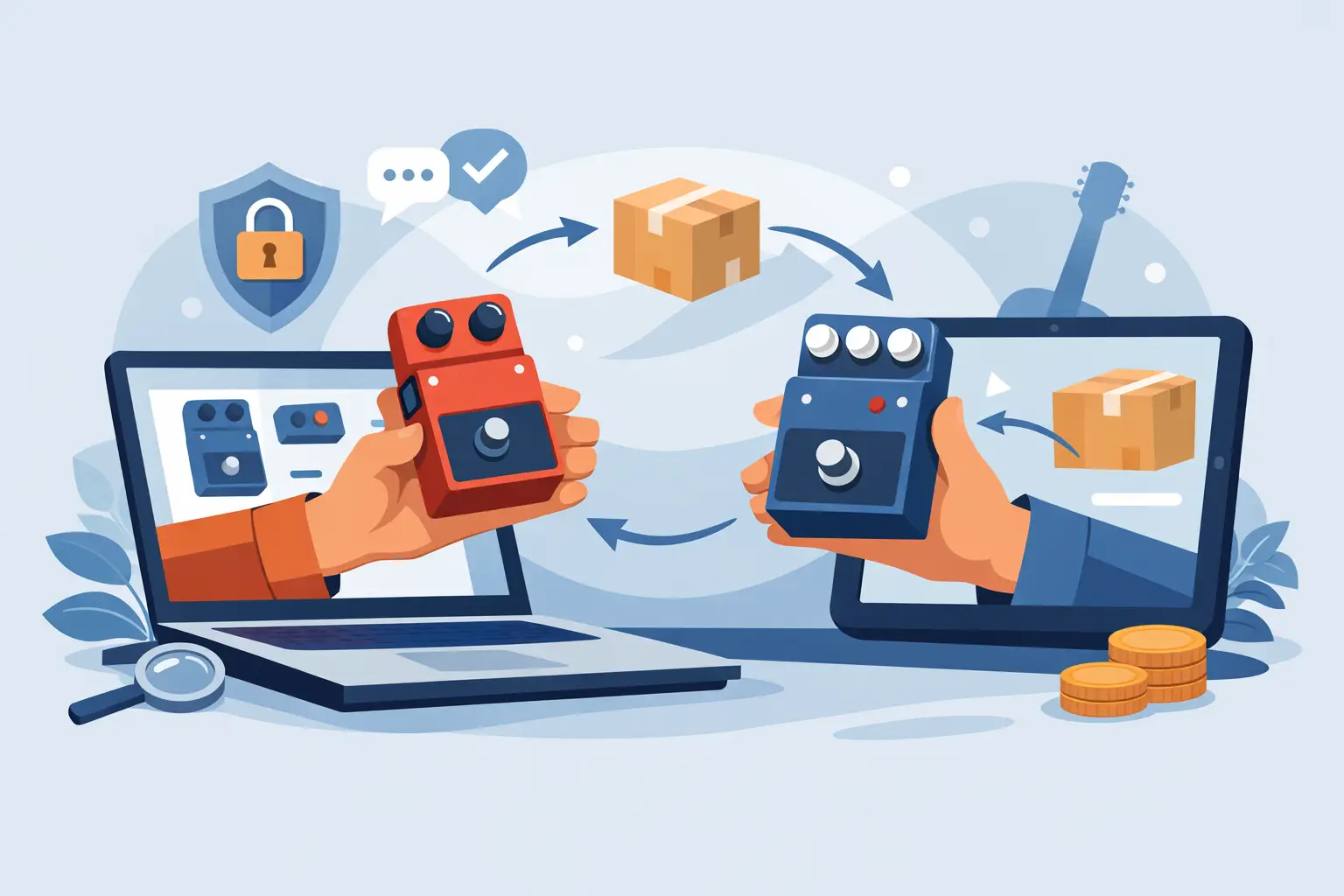
How to Trade Guitar Pedals Online Safely
Published on May 16, 2026That rare overdrive you want is out there. So is someone staring at your chorus pedal thinking the exact same thing. The appeal of trying new sounds without paying full retail is obvious, which is why more players want to trade guitar pedals online. The problem is that a great deal can turn into a bad experience fast when the trade depends on vague messages, shaky photos, or a stranger who disappears after you ship.
Pedal trading works best when the process is clear before either box leaves the house. If you know how to price your gear, document condition, set terms, and use a platform built for structured swaps, you can refresh your board without taking on unnecessary risk.
Why musicians trade guitar pedals online
Pedals are one of the easiest categories to trade because they are relatively compact, widely shippable, and always in motion between players. Someone buys a fuzz, realizes they are more of a transparent drive person, and starts looking for a swap. Another player has two delays and wants to turn one into a reverb. Trading makes sense because it lets both sides move toward the sounds they actually want without treating every gear change like a brand-new purchase.
There is also a practical side to it. Pedals hold value better than many people expect, especially when they are from respected builders, in clean condition, and come with the original box. That makes them ideal trade currency. For a lot of musicians, swapping a pedal they are not using feels smarter than listing it for cash, waiting for a buyer, and then shopping all over again.
Still, the convenience of online trading is exactly what attracts problems. Informal classifieds and social feeds can make a trade feel simple right up until someone misstates the condition, changes terms late, or stops responding altogether.
The real risks when you trade guitar pedals online
Most bad trades are not dramatic. They are annoying, expensive, and preventable. A pedal arrives with scratchy pots that were never mentioned. The power supply requirement was misunderstood. The photos hid chipped paint or missing screws. One side ships late, or not at all. In the worst cases, the other trader never intended to follow through.
The core issue is structure. When a trade happens through random messages, there is often no clear record of agreed value, condition, shipping deadlines, or what happens if something goes wrong. That leaves both people relying on trust without much accountability.
This is why musician-to-musician trades need more than enthusiasm. They need terms, proof, and protection. A safer marketplace does not remove all friction, but it reduces the chances that you will get burned by ghosting, fraud, or a wildly inaccurate listing.
How to trade guitar pedals online without getting burned
Start with realistic value, not wishful value. The fastest way to kill a trade is to overrate what you have. Used pedal pricing depends on brand, condition, rarity, included packaging, and demand. Limited runs and discontinued models can push higher, but not every out-of-production pedal is suddenly collectible. If your pedal has Velcro, cosmetic wear, replaced knobs, or no box, that matters.
A fair trade does not always mean equal original retail price. It means both sides agree on current market value. Sometimes that leads to a straight swap. Sometimes one side adds cash or bundles another item to make the numbers work.
Next, document the pedal like you expect the other person to inspect every inch - because they should. Show the front, back, sides, jacks, footswitch, knobs, and battery compartment if there is one. Include a clear photo of the serial number when relevant. If there is wear, show it plainly. If the pedal has been modded, say exactly what changed. If it only works with a certain power setup, include that too.
Honesty here does more than avoid disputes. It makes you a better trade partner. Serious musicians are more likely to move forward when the listing feels complete and direct instead of vague.
Write terms that leave less room for confusion
Before you agree to a swap, both sides should know exactly what is being exchanged, how each item is valued, who ships first or whether shipping happens in parallel, how tracking will be shared, and what packaging standard is expected. If one pedal includes the original box and candy, that should be stated. If one side is adding cash, spell out the amount.
This may sound formal for a pedal trade, but that formality is what keeps things clean. Clear terms protect both people. They also make it easier to spot trouble early. If someone avoids specifics, keeps changing details, or pushes you to move the conversation off-platform, take that seriously.
Reputation matters more than a lowball deal
A trader with solid reviews, a history of completed swaps, and consistent communication is usually a better bet than the person offering the flashiest trade. Pedals are replaceable. A bad transaction is not worth saving twenty bucks in perceived value.
Look for signs of reliability. Do they answer direct questions? Are their photos consistent? Does their account show a pattern of real gear activity? Have other musicians reported positive experiences? In gear trading, trust is not built by claims. It is built by behavior.
Why a dedicated marketplace changes the trade
If you are going to trade guitar pedals online with strangers, the platform matters. Generic marketplaces are built mostly for buying and selling, not true gear-for-gear exchanges. Social apps and forum messages can connect people, but they rarely add much protection when the trade starts moving.
A dedicated music gear trading marketplace gives the transaction a framework. That includes listing structure, agreed terms, reputation signals, and actual safeguards around the exchange. Instead of hoping both sides do the right thing, the system creates more accountability from the start.
That is the difference between casual coordination and a real trade process. On Bartr, for example, the platform is built around swaps, with protections like deposits, delivery confirmation, reputation scores, reviews, and human-led dispute resolution. For musicians who are tired of no-shows, bait-and-switch listings, or direct-message roulette, that structure is the point.
Shipping pedals the right way
Even a perfect trade agreement can fall apart if the pedal is packed carelessly. A stompbox is sturdy, but knobs can snap, jacks can take hits, and loose packing inside a box is asking for trouble.
Use a box that fits the pedal closely without crushing it. Wrap the pedal so it cannot move around in transit. If you have the original box, that helps, but it should still be cushioned inside the shipping carton. Remove batteries if appropriate. Protect knobs and switches. Then send tracking promptly and keep communication simple and timely.
If a trader seems casual about packing, ask questions before you ship. It is not overkill. It is how you avoid receiving a pedal that now crackles because it spent three days bouncing around inside a half-empty box.
When a trade is not actually a good trade
Not every offer deserves a yes. Sometimes the values are technically close, but the pedal you are getting will be harder to move later. Sometimes the other item fills the same role as something already on your board. Sometimes you are agreeing because the trade feels available, not because it makes sense.
A good pedal trade should improve your setup, your options, or your budget position. If it creates uncertainty, duplicates a tone you already have, or depends on too many assumptions, passing is usually the smarter move. There will always be another pedal.
This is especially true with hype-heavy gear. A pedal that is popular this month may not hold the same attention later. That does not mean you should avoid trend-driven trades, only that you should know why you want the item beyond its current buzz.
Trade smarter, not just faster
The best online pedal trades feel straightforward because the hard parts were handled up front. Value was discussed honestly. Condition was documented clearly. Terms were specific. Shipping was handled with care. And the platform supported the trade instead of leaving both sides to improvise.
That is what confidence looks like in a peer-to-peer gear swap. Not blind trust, and not endless suspicion either. Just a process that respects your gear, your money, and your time.
If you are ready to change up your board, be patient enough to do it right. The right trade should leave you excited to plug in, not wondering whether the other package is ever going to show up.