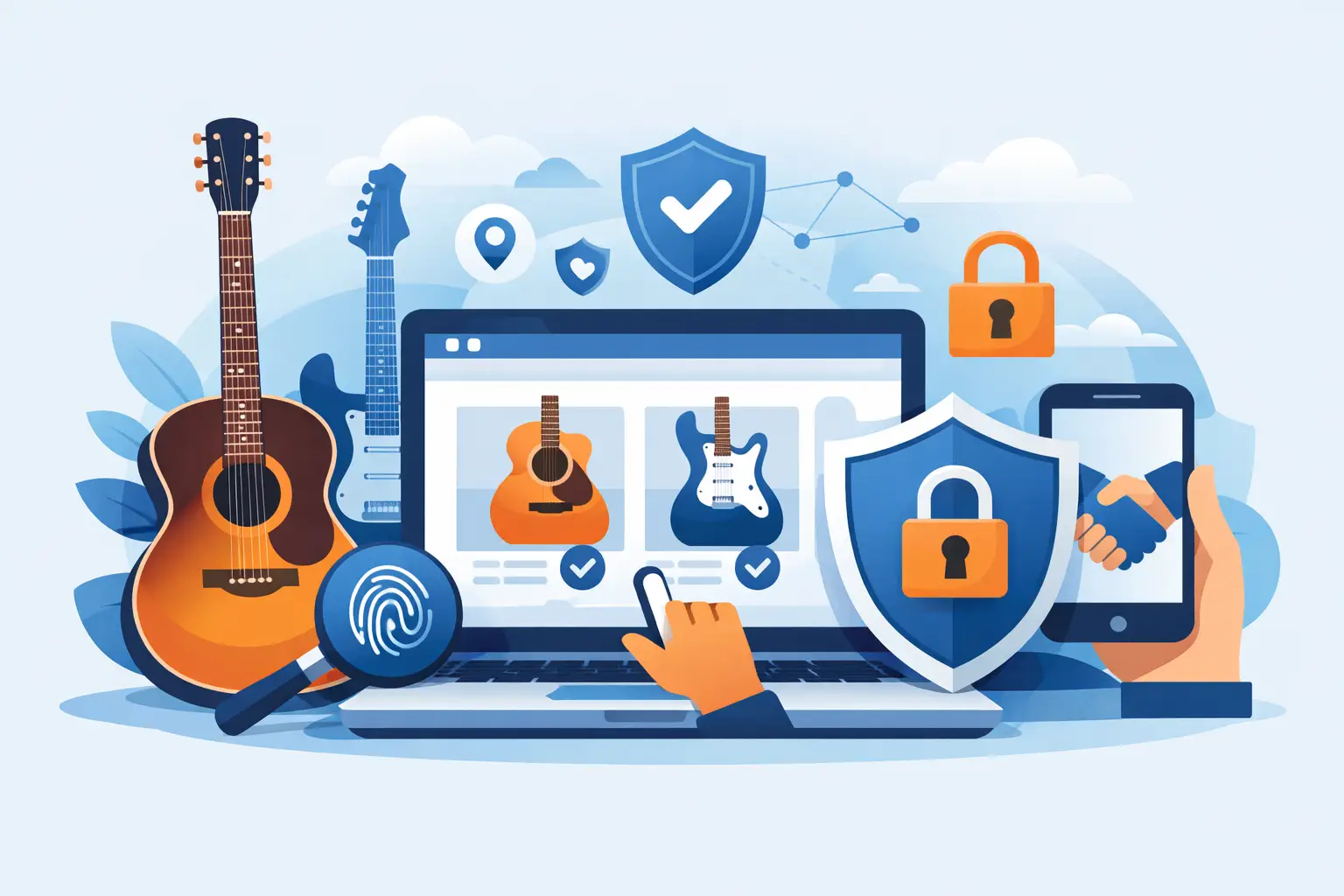
What Makes an Online Guitar Trade Marketplace Safe?
Published on May 15, 2026That dream trade usually starts the same way - you spot a guitar you actually want, message the owner, and start doing mental math on what you could swap. Then the doubts show up. Is the other person real? Are the photos current? Will they ship when they say they will? An online guitar trade marketplace only works if it handles those questions better than a random classifieds thread ever could.
For guitar players, trading is part of the culture. One player wants to move a Telecaster for a semi-hollow. Another is ready to part with a Les Paul because the neck never quite fit. A good trade lets both people refresh their setup without taking a full cash loss. The problem is that most places built for peer-to-peer deals were never designed around swaps. They were designed around listings, messages, and a lot of trust between strangers.
That gap matters. Trading a guitar is not the same as selling an old phone or buying furniture from a local app. Instruments have condition nuances, setup quirks, mods, finish wear, serial numbers, replacement parts, and shipping risks. If the platform treats all items the same, the trade gets riskier fast.
Why a generic marketplace falls short
Most general marketplaces are fine for simple cash sales with local pickup. They start to break down when the transaction gets more complicated. A guitar-for-guitar swap has more moving parts, and every extra step creates another chance for something to go wrong.
One person ships first while the other stalls. One guitar arrives with undisclosed fret wear. One side changes the deal in direct messages after both parties thought they had agreed. Sometimes nobody is technically running a scam - the process is just loose enough that misunderstandings turn into failed trades.
That is why an online guitar trade marketplace should not just be a place to post gear. It should provide structure. The best platforms reduce ambiguity before the trade starts, not after it falls apart.
What a real online guitar trade marketplace should include
The first requirement is clear terms. Both sides should know exactly what is being traded, what condition each item is in, whether accessories are included, who handles shipping, and what happens if one side does not follow through. If those details live only in a message thread, the deal is already on shaky ground.
The second requirement is accountability. Reputation scores, reviews, and transaction history matter because musicians want signals that another user actually follows through. Trust is easier when it is based on documented behavior instead of a profile photo and a few quick replies.
The third requirement is protection during the exchange itself. This is where many marketplaces stop short. Matching two users is easy. Protecting both sides while gear is in transit is harder. Deposits, delivery confirmation, and a structured process make a real difference because they create consequences for bad behavior and reduce the chance of ghosting.
Human support matters too. When a guitar arrives with issues that were not disclosed, nobody wants to explain fret sprout, neck bow, or swapped pickups to an automated help bot that treats the item like a generic package. In gear trading, disputes are usually specific. The platform should have real people involved who understand how musicians buy, sell, and trade.
Condition details are not a small thing
A lot of trade problems start with a listing that is technically accurate but practically misleading. Saying a guitar is in good condition can mean almost anything. To one player, it means a few finish marks. To another, it means visible wear, scratchy pots, and a repaired headstock that “doesn’t affect playability.”
A better marketplace pushes for detail. Not because musicians need more paperwork, but because the trade only works when expectations match reality. Clear photos, honest descriptions, and structured fields for condition help both sides evaluate value with fewer surprises.
This is especially important with guitars because small differences change the trade decision. Neck profile, fret life, pickup swaps, bridge replacements, case inclusion, and even total weight can matter. An experienced player will ask those questions anyway. A smart platform builds room for them up front.
Shipping is where trust gets tested
Local meetups feel simpler, but they limit your options. A dedicated online guitar trade marketplace opens access to better matches across the country, which is a major advantage if you are chasing a specific model, finish, or feature set. The trade-off is shipping.
Shipping a guitar safely takes more than printing a label. It means proper packing, clear confirmation, and a process both parties can rely on. Without that structure, users are left guessing whether the other side shipped on time, packed responsibly, or sent what they promised.
This is where built-in safeguards matter most. Delivery confirmation creates a shared record. Structured timelines reduce stalling. Deposits add seriousness to the deal. None of that removes every risk, but it lowers the odds that one person is left holding the bag while the other disappears.
Safer does not mean friction for no reason
Some musicians hear words like protection, verification, or deposits and assume the process will be slow or overcomplicated. That is a fair concern. Nobody wants a trade platform that feels harder to use than the trade itself.
The right balance is simple: add friction where it prevents real problems, remove friction where it does not. Asking both users to agree to clear terms makes sense. Requiring confirmation when items are delivered makes sense. Giving people a way to resolve disputes with real human review makes sense. Burdening users with unnecessary steps that do not improve fairness does not.
A good marketplace is not trying to turn gear trading into corporate paperwork. It is trying to make sure two musicians can trade with confidence, even if they have never met.
Why musician-specific platforms have an edge
A musician-specific marketplace understands that gear is not interchangeable. A Mexican Strat with upgraded pickups, a vintage-correct reissue, and a parts build may all sit near the same price point, but they are not the same trade. Players care about details because those details affect sound, feel, reliability, and resale value.
That kind of context changes the user experience. Search is more useful when it reflects real gear categories. Listings are better when they are built for instruments, amps, pedals, and studio equipment instead of random household goods. Trade conversations are more productive when both sides are already operating inside a gear-focused environment.
It also helps with trust. A platform built around musicians attracts users who understand the stakes of condition, originality, packaging, and communication. That does not make every deal perfect, but it raises the baseline. People are not just unloading clutter. They are trading tools they care about.
The best trade is not always the highest-value one
One thing experienced players learn quickly: a fair trade is not always an equal-price trade on paper. Sometimes the better deal is the guitar you will actually play. Sometimes a small cash adjustment makes sense. Sometimes walking away is the right call because the other side is vague, evasive, or suddenly changing terms.
A strong marketplace helps users make better calls, but it cannot replace judgment. If the listing is thin, ask questions. If the photos avoid known wear areas, ask for more. If the trade feels rushed, slow it down. Good platforms reduce risk, but smart users still pay attention.
That is also why reputation systems and dispute support matter so much. They do not just punish bad actors. They encourage better behavior before a problem starts. When users know the transaction is documented and there is a real process behind it, they tend to communicate more clearly and follow through more reliably.
What to look for before you trade
If you are comparing platforms, keep it simple. Look for an online guitar trade marketplace that does four things well: it makes listings clear, it makes terms explicit, it adds protection during the exchange, and it gives users access to real support when something goes sideways.
That combination is what separates a true trading platform from a message board with product photos. The point is not just to find a match. The point is to finish the trade without getting burned.
Bartr is built around that idea. Not just helping musicians find gear worth trading for, but giving them a safer, more structured way to complete the trade itself.
The right guitar trade should feel exciting, not stressful. If the platform leaves you doing all the trust work on your own, keep looking.