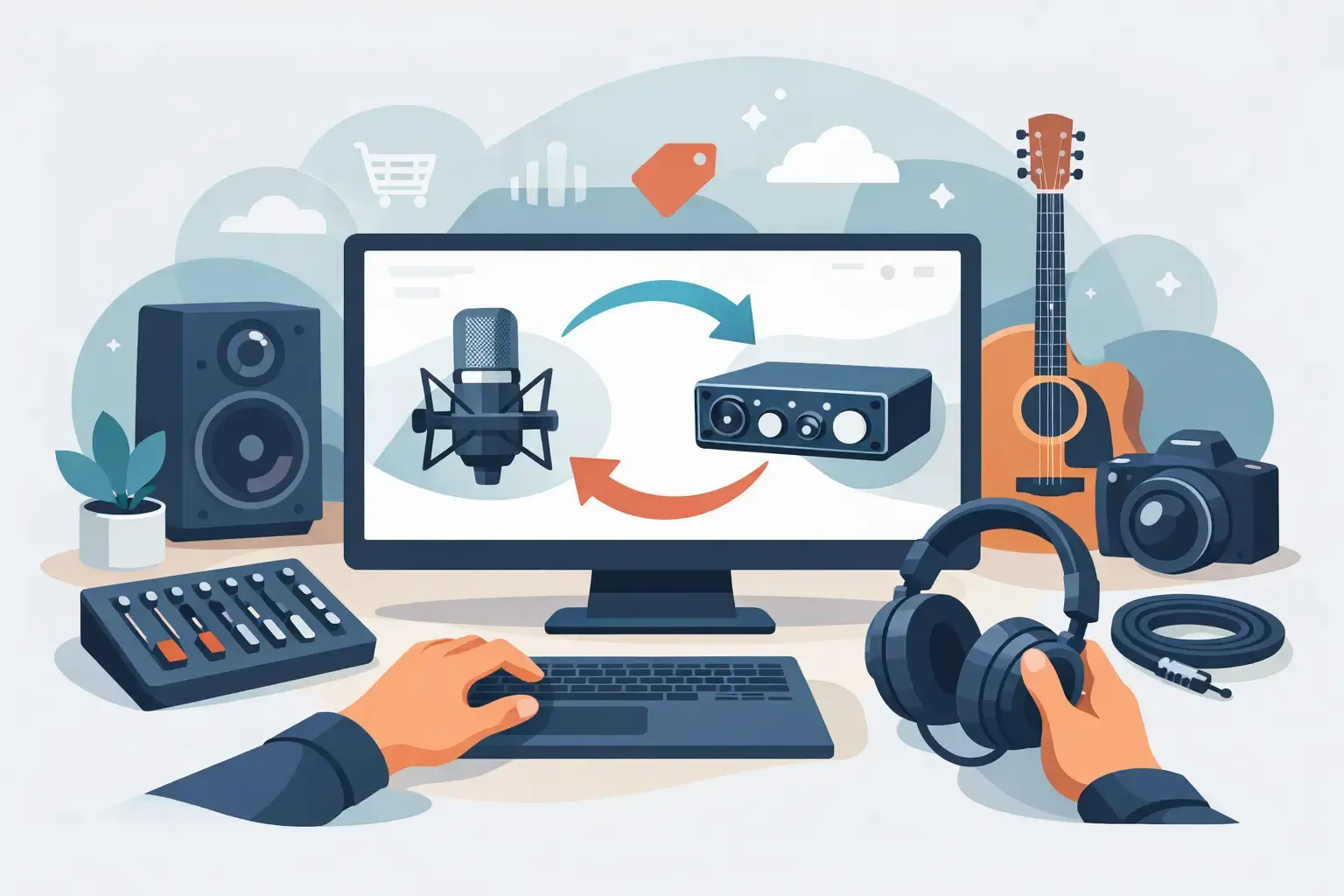
What Makes a Good Recording Gear Swap Site?
Published on May 20, 2026That “great deal” on a used interface can get expensive fast when the seller stops replying, the mic arrives with a noisy capsule, or the trade terms suddenly change mid-conversation. A recording gear swap site only works if it does more than put two users in the same chat. For musicians, producers, and studio owners, the real value is trust - not just inventory.
Recording gear trades are different from casual marketplace flips. People are swapping tools they actually rely on: preamps, monitors, interfaces, outboard compressors, channel strips, microphones, rack gear, and controllers that shape real sessions. When that gear is misrepresented or the other party disappears, it is not just annoying. It can delay projects, waste money, and make the next trade feel like a gamble.
Why a recording gear swap site needs more structure
Generic resale platforms are built for almost anything. A lamp, a bike, a couch, a guitar pedal, a studio monitor - it all gets thrown into the same system. That sounds convenient until you try to make a serious gear trade with someone you do not know.
Recording gear comes with details that matter. An interface may have worn I/O, a mic may have been exposed to moisture, and a compressor may pass signal while still having calibration issues. In a casual listing environment, those details often get buried, skipped, or misunderstood. Then the trade turns into a dispute about condition, value, or whether the item matches the description at all.
A dedicated swap platform should reduce that ambiguity. It should make it easier to describe gear clearly, set expectations before anything ships, and create accountability for both sides. That structure matters more in recording gear than in many other categories because the condition is not always obvious from a few photos.
What to look for in a recording gear swap site
The first thing to check is whether the platform is built for swaps, not just sales. That sounds obvious, but a lot of marketplaces treat trades like a side conversation users have to figure out on their own. One person sends a message, the other suggests a partial cash add, and now both sides are improvising terms in DMs.
That is where deals go sideways. A useful recording gear swap site should make the trade itself the center of the transaction. Both users should be able to agree on who is sending what, what each item is worth, whether cash is being added, and what happens if either side backs out.
The next thing is protection. If a platform has no deposits, no delivery confirmation, no record of agreed terms, and no dispute process, then it is really just a classifieds board with better branding. Protection is what separates a serious platform from a risky one.
Reputation also matters, but only if it is tied to actual transactions. Reviews from completed trades tell you more than a profile bio ever will. When you are considering a swap involving a pair of studio monitors or a vintage microphone, you want some evidence that the other person follows through, communicates clearly, and sends gear as described.
The trust features that actually matter
Built-in deposits are one of the clearest signals that a platform takes accountability seriously. They give both parties skin in the game and reduce the odds of ghosting once terms are set. No feature can eliminate bad behavior entirely, but requiring commitment changes how people act.
Delivery confirmation is just as important. In an unstructured trade, both users are left hoping the other person shipped when they said they did. A platform with tracked milestones creates a shared record of what happened and when. That makes misunderstandings easier to resolve and dishonest behavior harder to hide.
Clear listing fields matter more than people think. If a seller has to specify cosmetic condition, functional issues, included accessories, original packaging, and known defects, you get fewer vague listings and fewer surprises. For recording gear, that extra detail is not overkill. It is the difference between a fair trade and a frustrating one.
Human dispute resolution is another big one. Automated systems can help with simple issues, but gear disputes are rarely simple. A microphone that “works” but has inconsistent self-noise, or monitors that arrived with cabinet damage, may not fit a canned support flow. Real humans reviewing evidence and trade terms make a huge difference when something gets contested.
Why recording gear trades are especially risky
With guitars or pedals, problems are often visible right away. Recording gear can be trickier. A preamp might power on and still introduce hiss. A MIDI controller might have intermittent encoder issues that only show up after a few minutes of use. A set of monitors might sound fine at low volume but rattle under normal studio levels.
Shipping adds another layer. Studio gear is often heavy, fragile, or both. Rack units can get bent ears. Condenser mics can suffer from rough handling. Monitors need proper packing, and not everyone knows how to do that well. A recording gear swap site should account for this reality by creating clear expectations around packaging, shipment confirmation, and condition reporting.
Valuation can also get messy. Used recording gear does not always have straightforward pricing, especially for older rack gear, discontinued interfaces, boutique preamps, or items bundled with cases and accessories. A good platform helps both users establish fair value before the trade moves forward, instead of leaving everything to negotiation chaos.
What a better swap experience should feel like
The best swap experience is not flashy. It is calm.
You find gear that fits your setup. You can see what the other user is offering, how they describe condition, and whether they have a track record of completed trades. The terms are documented. Both sides commit. Shipment and delivery are tracked. If something goes wrong, there is a process.
That may sound basic, but it solves most of what makes peer-to-peer gear trading stressful. Musicians are not asking for magic. They want a fair system that makes follow-through more likely and scams less likely.
This is where a platform like Bartr makes sense for recording gear traders. It is built around the swap itself, with deposits, delivery confirmation, reputation tools, and real human dispute handling. That does not just make trading feel safer. It makes it more practical for people who actually use their gear and cannot afford to lose time chasing unreliable strangers.
How to tell if a recording gear swap site is worth using
Look at the platform the same way you would inspect a used channel strip: not by the sales pitch, but by what is actually there.
If a site mainly depends on private messages and hope, it is not built to protect you. If it has structured listings, visible trade terms, user accountability, and a clear path for resolving problems, that is a better sign. If reviews are tied to completed exchanges and the platform can verify the steps of a transaction, even better.
You should also pay attention to whether the platform feels musician-specific. A site that understands the difference between cosmetic wear and functional defects on recording gear will usually guide users toward better listings and fewer bad surprises. That category knowledge matters because gear people notice details, and those details are often what make a trade fair or unfair.
There is always some risk in trading used equipment online. No platform can make strangers identical to trusted local friends. But a good recording gear swap site can narrow the gap by replacing guesswork with process.
If you are trading gear that matters to your studio, that is the standard to use. Not how many listings a platform has. Not how fast someone replies. Not whether the first offer looks tempting. The real question is whether the platform gives both sides a reason to be honest and a system that holds up when things get complicated.
That is what makes a swap worth doing. Not just the chance to get new gear, but the ability to trade smarter without wondering what goes wrong after you hit send.