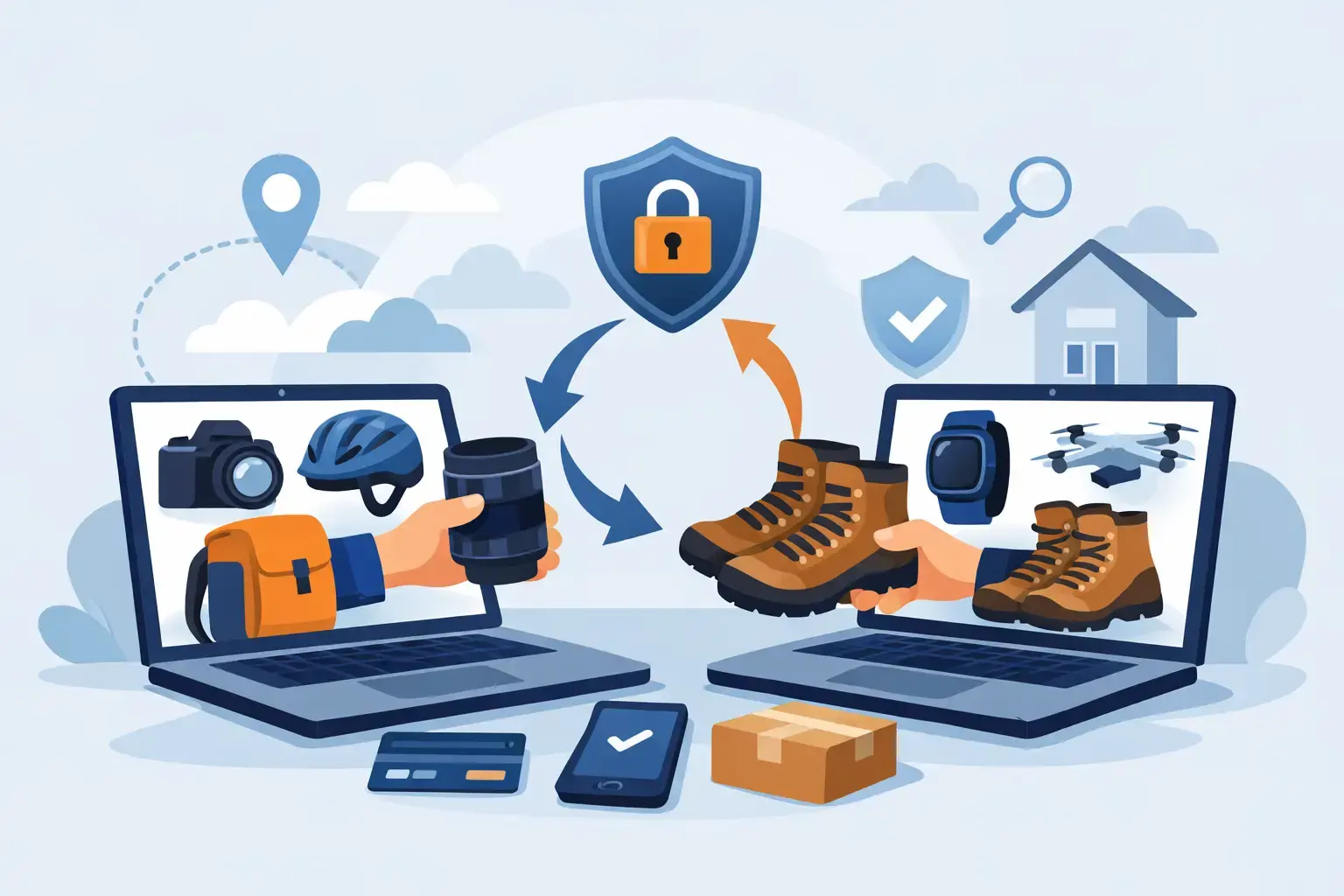
What Makes Gear Swaps Safer Online?
Published on June 18, 2026A trade can look perfect right up until it goes sideways. The photos check out, the messages feel normal, and both people say they’re ready to ship. Then one box never arrives, one item shows up in worse condition than promised, or one person disappears after getting what they wanted. That’s usually where people start asking what makes gear swaps safer, especially when the trade involves valuable instruments, pedals, synths, or studio gear.
The short answer is this: safer swaps don’t come from good vibes or lucky timing. They come from structure. When a platform adds clear terms, verified actions, and real accountability to the process, the risk drops fast.
What makes gear swaps safer in practice
A safe gear swap is not just two people agreeing to trade. It’s two people agreeing inside a system that reduces the most common failure points. In musician-to-musician trading, those failure points are pretty predictable: ghosting, misrepresented condition, uneven value, bad packing, fake shipping claims, and disputes that turn into dead ends.
The safest swaps are built to handle those problems before they happen. That means both sides know exactly what is being exchanged, what condition it’s in, when it ships, how delivery is confirmed, and what happens if something goes wrong. Without that structure, even an honest trade can turn messy.
This is where many generic marketplaces fall short. They may be fine for browsing listings, but they often leave the actual trade to private messages and trust alone. Once the conversation moves off-platform or depends on informal promises, the protection usually drops with it.
Safety starts with clear terms, not just trust
Musicians are used to working on trust. That makes sense in local scenes, rehearsal spaces, and studio circles. But online swaps between strangers need more than a handshake in the DMs.
The first thing that makes a swap safer is having the terms spelled out clearly. That includes the exact items being traded, the stated condition, any included accessories, and whether cash is being added on one side to balance the deal. If those details are vague, the swap becomes vulnerable right away.
For example, “great condition” can mean very different things depending on the person. One player means clean and fully functional. Another means it works, but the tolex is torn, the knobs are mismatched, and the footswitch cuts out sometimes. Clear listings and structured item details reduce that gap.
The same applies to value. Not every trade is item-for-item equal, and that’s fine. But a safer platform makes those terms explicit so no one is improvising the deal halfway through.
Condition transparency matters more than people think
Most swap disputes are not dramatic fraud cases. A lot of them come from mismatched expectations. The pedal was “mint” except for Velcro and paint chips. The guitar “just needed strings” but actually had electronic issues. The interface powered on but had noisy inputs.
That’s why better swaps depend on honest descriptions, usable photos, and a process that encourages full disclosure. Good structure doesn’t assume every user is dishonest. It assumes that people describe gear differently, and it closes the gap before the trade begins.
Deposits change behavior
One of the biggest differences between a risky trade and a safer one is whether both people have something on the line.
Deposits help because they create commitment. When each side has to put forward a deposit tied to the transaction, the trade becomes more than a casual conversation. It discourages flaking, fake intent, and last-minute disappearing acts. People are much less likely to vanish when there’s a concrete consequence for doing it.
Deposits also help balance trust. In a direct peer-to-peer swap, one person often ends up feeling more exposed than the other, especially if they ship first or if their item carries more value. A deposit-backed system creates mutual accountability instead of forcing one side to take all the risk.
That doesn’t mean deposits solve everything. They won’t fix bad packing or magically verify condition. But they do filter out a lot of unserious behavior, which is a major safety upgrade on its own.
Delivery confirmation closes a major loophole
A common problem in informal trades is the shipping gray area. One person says they sent it. The other says it never arrived. Tracking may be incomplete, screenshots may be unclear, and now both sides are stuck arguing over what happened.
Delivery confirmation makes swaps safer because it replaces claims with verifiable milestones. The item shipped. The item was delivered. The process is based on recorded events, not who sounds more convincing in a message thread.
That matters even when both people are acting in good faith. Carriers lose packages. Labels get created before a box is actually dropped off. Packages arrive damaged or go to the wrong address. A structured platform can use delivery confirmation as part of a clear process instead of leaving users to sort it out on their own.
Reputation systems work when they reflect real transactions
Reviews and ratings are useful, but only if they mean something. On some marketplaces, reputation can be shallow. A person might have years on the platform and still be unreliable in a trade. Or they may have positive feedback from cash sales that tells you nothing about how they handle a gear-for-gear exchange.
What makes gear swaps safer is a reputation system tied to actual swap behavior. Did the person communicate clearly? Did they ship on time? Was the item as described? Did they follow through without drama? Those signals are far more useful than a generic star rating.
For musicians, that kind of reputation matters because gear categories can get specific fast. Trading a beginner keyboard is one thing. Trading a boutique amp, a vintage snare, or a multi-piece studio setup is another. Buyers and traders want some proof that the other side knows how to handle gear responsibly.
Human dispute resolution is not a bonus feature
When a trade goes wrong, bots and canned help articles are not enough. You need a process, and ideally, an actual person who can review the facts.
This is one of the biggest reasons structured swap platforms are safer than classifieds or social groups. If there’s no built-in dispute path, the trade is basically over the moment trust breaks down. Your only tools are screenshots, frustration, and hoping the other person suddenly becomes reasonable.
Human-led dispute resolution changes that. It gives both sides a defined next step. It also makes bad actors less comfortable because they know the transaction won’t just disappear into private messages.
There’s still nuance here. Not every dispute is simple. Sometimes the item was damaged in transit. Sometimes both users misunderstood the agreement. Sometimes one side packed carelessly and the carrier made it worse. A real dispute process can account for those gray areas better than an automated system ever will.
Safer swaps also reduce friction
Safety is not just about preventing scams. It’s also about reducing the chaos that causes legitimate trades to fail.
A lot of musicians have had this experience: a promising trade drags across five days of messages, somebody changes the terms, shipping details get buried, and no one is fully sure what was agreed to anymore. That kind of friction kills good deals.
A safer platform simplifies the path. The listing is structured, the trade terms are visible, both sides confirm the same details, and the transaction moves through clear steps. That kind of organization protects users because confusion is often where mistakes and disputes start.
This is especially helpful for higher-value gear. The more expensive or specialized the item, the more costly a misunderstanding becomes. A vague trade for a used practice amp is annoying. A vague trade for a guitar, amp head, and cash difference can become a serious problem.
Why purpose-built swap platforms have an edge
Generic marketplaces are designed to list things. A safer swap platform is designed to complete trades.
That difference matters. Swapping gear is not the same as selling for cash. There are two items, two conditions to verify, two shipments to track, and often a negotiated value gap. The process is more complex by default, which means the safety tools have to match.
That’s why a musician-focused marketplace can do a better job here. It understands how people trade guitars, pedals, synths, drums, and recording gear in the real world. It builds around those behaviors instead of forcing users to stitch together a trade process on their own. Platforms like Bartr are built with that exact problem in mind - not just helping you find gear, but helping you trade it with built-in protection.
None of this means every swap is risk-free. There’s always some level of trust involved when physical gear changes hands. But the safest swaps are the ones where trust is supported by structure: clear terms, deposits, delivery confirmation, meaningful reviews, and real humans available when something breaks.
If you’re trading gear online, the best question is not whether the other person seems legit. It’s whether the process makes it hard for the deal to go wrong in the first place.