Classifieds vs Gear Trading Platforms
Published on June 26, 2026You find the perfect pedal trade, send your details, pack your gear, and then the other person goes quiet. Or worse, the item shows up with issues that were never mentioned. That is the real difference in classifieds vs gear trading platforms. One gives you a place to post. The other is built to help the trade actually happen the way both sides agreed.
For musicians, that distinction matters more than ever. Trading gear is not the same as selling an old couch or buying a used lamp. A guitar can have a replaced neck, an amp can have hidden repair history, and a synth can arrive with half its outputs acting up. When the transaction is built around trust between strangers, the platform itself either reduces risk or leaves you to manage it alone.
What classifieds are good at
Classifieds still have a place. They are simple, familiar, and usually fast to use. If you want to post a listing quickly, field a few messages, and handle the rest yourself, classifieds can work.
That flexibility is why so many musicians still use them. You can list almost anything, set your own terms, and negotiate however you want. If you know exactly what you are looking for and you are comfortable spotting red flags, classifieds can sometimes lead to solid local deals.
They also work well when the transaction is straightforward. A cash sale with an in-person meetup is very different from a cross-country trade involving a vintage snare, a boutique overdrive, or a pair of studio monitors. The more complex the exchange gets, the more the limits of classifieds start to show.
Where classifieds break down for gear trades
The main problem with classifieds is not that bad deals happen there. It is that the platform usually does very little to prevent them.
Most classifieds are designed for listings and messages, not structured swaps. That means musicians end up handling verification, communication, shipping expectations, item condition disputes, and no-show risk on their own. If the other person disappears, changes the terms, or sends something different from what was promised, there may be no meaningful process to fix it.
This is where casual gear trading becomes stressful. You are not just evaluating the item. You are evaluating the seller’s honesty, the buyer’s reliability, the clarity of the agreement, and whether either side will follow through once the box is in transit.
That burden gets heavier in trades than in simple sales. With a cash deal, you can walk away if the numbers do not work. With a swap, both sides are trying to match value, condition, timing, and shipping. There are more moving parts, which means more chances for confusion or bad behavior.
How gear trading platforms change the transaction
Gear trading platforms are built around a different idea. Instead of acting like a digital bulletin board, they create structure around the exchange itself.
That structure matters because it reduces the gray area where most problems happen. Rather than leaving every detail to private messages, a purpose-built platform can create defined terms, track progress, and add accountability on both sides. That makes the process feel less like a gamble and more like an actual transaction.
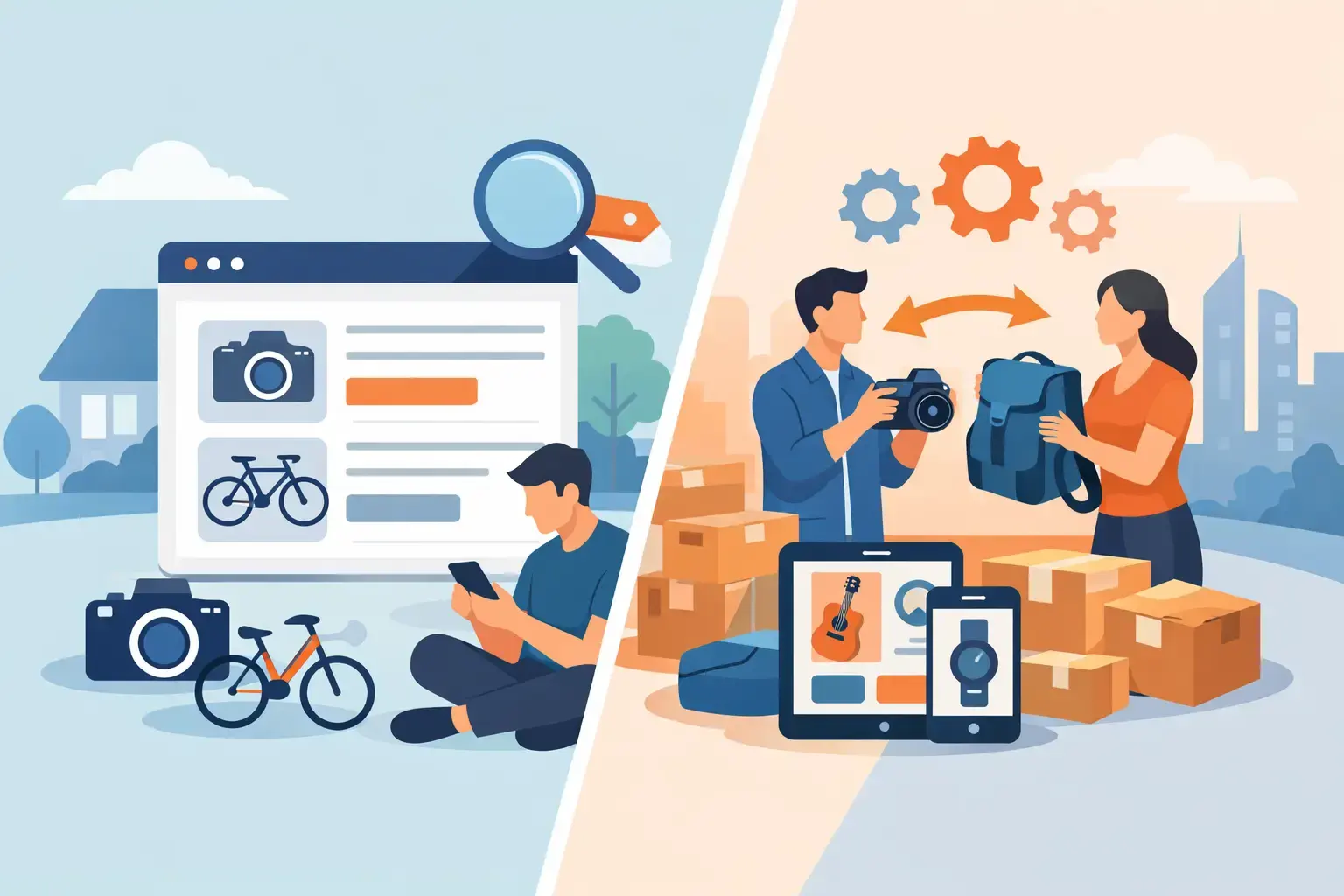
In the classifieds vs gear trading platforms debate, this is the biggest practical difference. Classifieds give you reach. Gear trading platforms give you process.
For musicians trading valuable or specialized gear, process is not a nice extra. It is what keeps a trade from falling apart halfway through.
Classifieds vs gear trading platforms on trust
Trust is usually treated like a gut feeling in informal marketplaces. Maybe the photos look real. Maybe the messages seem normal. Maybe the person has a decent profile. That kind of trust can work, but it is fragile.
A dedicated trading platform turns trust into something more concrete. Reputation scores, reviews, deposits, delivery confirmation, and clearly documented terms all help replace guesswork with signals you can actually use. If there is a dispute, there is also a record of what was agreed.
That changes user behavior. People are generally more reliable when there is structure around the deal. They are less likely to ghost, misrepresent condition, or go silent after receiving your item if the platform requires accountability from both sides.
For musicians who have been burned before, this is usually the turning point. They are not looking for more messages. They are looking for fewer ways for a trade to go wrong.
Safety is not just about scams
When people talk about safer trading, they often mean obvious fraud. Fake listings, stolen photos, or someone taking the gear and disappearing. Those are real problems, but they are not the only ones.
A lot of failed trades come from softer issues that classifieds do very little to manage. Poor communication. Incomplete descriptions. Different expectations about shipping speed. Surprise damage. Missing accessories. Undisclosed repairs. These problems are common because informal marketplaces rely heavily on assumptions.
A gear trading platform helps by forcing more clarity upfront. What exactly is being traded, in what condition, on what timeline, and with what protections? The clearer those terms are, the less room there is for conflict later.
That does not mean every trade becomes risk-free. Nothing online works like that. But reducing avoidable risk is the whole point.
Why musicians need a platform built for musicians
Music gear has its own language, value logic, and condition standards. Someone outside that world may think a pedal is a pedal or a guitar is a guitar. Musicians know better.
Original parts matter. Cosmetic wear can be fine on one piece of gear and a red flag on another. A speaker cab with a swapped driver is not the same item anymore. A synth with a sticky keybed might still function, but that issue affects value. Generic marketplaces are not designed around these realities.
That is why purpose-built trading platforms feel different. They are not just safer. They are more relevant. The users understand what they are looking at, and the platform can support the kind of details that matter in gear transactions.
This is also where a service like Bartr makes sense. It is designed around gear-for-gear swaps with built-in protection, structured terms, and human-led dispute support, which is exactly what generic classifieds tend to lack.
The trade-off: speed versus control
To be fair, classifieds can sometimes feel faster. You post, message, negotiate, and move. There is less structure, which can mean less friction at the start.
But less friction upfront often creates more friction later. You may spend hours sorting through flaky replies, answering vague questions, or chasing someone who sounded serious until it was time to ship. What feels quick in the first ten minutes can become a drain over the next ten days.
Gear trading platforms usually ask for a bit more process because that process is doing real work. It is setting expectations, documenting terms, and reducing the chances of a failed exchange. If you value control and follow-through, that extra structure is usually worth it.
So which is better? It depends on the deal. For a local, low-stakes cash sale, classifieds may be enough. For a mailed trade between strangers involving real value, a structured platform is the smarter move.
How to choose the right option for your next trade
Start with the risk level of the transaction. If the gear is expensive, rare, fragile, or hard to verify, you want more than a messaging thread. You want a process.
Think about the kind of problem you are most likely to face. If your main concern is getting more eyeballs on a listing, classifieds can help. If your main concern is whether the other person will follow through honestly, a dedicated trading platform is the better fit.
Also be honest about your own tolerance for uncertainty. Some musicians are comfortable handling negotiation, screening, and shipping details themselves. Others are done with the guesswork. Neither approach is wrong, but they lead to very different experiences.
The best platform is not the one with the most listings. It is the one that gives you the best chance of completing a fair trade without unnecessary risk.
Good gear is hard enough to find. Trading it should not feel like a leap of faith.