Musician to Musician Marketplace Done Right
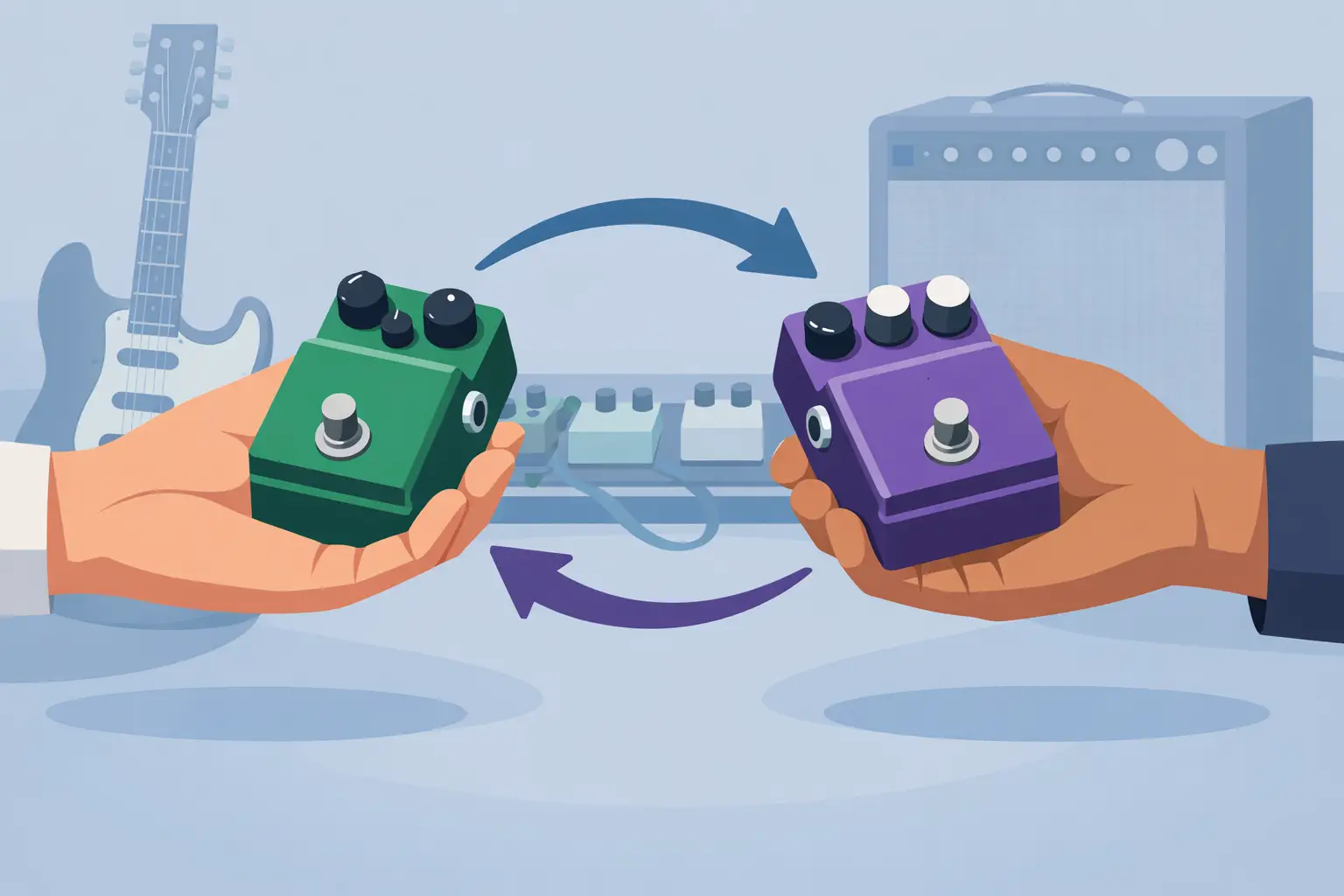
Published on July 12, 2026That fuzz you loved six months ago might be the one collecting dust now. Pedals move fast in the real world - tastes change, boards shrink, and sometimes the right trade is better than another cash sale. If you’re figuring out how to exchange guitar pedals, the goal is simple: get gear you will actually use without taking on unnecessary risk.
A pedal trade sounds easy until it isn’t. One person says a pedal is mint, the box shows up with a scratchy footswitch. A local meetup gets pushed three times. A direct-message trade starts strong, then one side disappears after shipping. None of that is rare. Exchanging pedals works best when you treat it like a real transaction, not a casual favor between strangers.
How to exchange guitar pedals without getting burned
The smartest trades start before you message anyone. You need to know what your pedal is worth, what condition it’s actually in, and what kind of trade you will accept. If you skip those basics, you end up negotiating from guesswork.
Start with the real market value, not the number you hope your pedal is worth. Recent sold prices matter more than asking prices. A limited run overdrive might look expensive in old listings, but if the last five sold lower, that’s the range that counts. Condition changes value fast with pedals, especially for boutique brands, discontinued runs, or units with original box and paperwork.
Be honest about condition. “Excellent” should mean excellent. If the velcro is on the bottom, say so. If the knobs were replaced, say so. If the LED is dim but the pedal works, mention it upfront. Clear descriptions do more than protect the other person - they protect you from disputes later.
Photos matter more than people think. Take clear shots of the front, back, sides, jacks, power input, and serial number if there is one. Show the box and any extras if they are included. A blurry top-down photo under stage lighting is not enough when you’re asking someone to trust a trade.
Decide what kind of pedal exchange makes sense
Not every trade should be a straight swap. Sometimes one pedal is worth more, or one side includes extras like original packaging, rare finishes, or power supplies. That’s where many trades go sideways. People act like “close enough” is obvious when it usually isn’t.
A straight trade works best when both pedals are in similar demand and similar condition. A plus-cash trade makes more sense when there’s a clear value gap. There is nothing wrong with balancing a deal. In fact, it often makes the exchange more honest.
You also need to think about why you’re trading. If you’re moving a drive pedal that is easy to replace, you may want a deal that favors speed and convenience. If you’re letting go of a hard-to-find analog delay, patience matters more. The right trade depends on whether you care most about value, rarity, or getting a new sound on your board quickly.
Good trade terms beat fast trade terms
Before anything ships or any meetup is set, both sides should agree on the exact terms. That means the specific pedal model, version if relevant, condition, included accessories, shipping method, and who covers any difference in value. If there is cash involved, the amount should be clear. If there is a deadline for shipping, that should be clear too.
This is where vague deals fall apart. “I’ll send it out soon” is not a term. “Excellent condition” without photos is not a term. The more specific the agreement, the less room there is for excuses later.
Red flags when exchanging guitar pedals
Most bad trades give you warning signs before they go bad. The trick is not talking yourself out of what you’re seeing.
Be careful with traders who avoid clear photos, dodge questions about condition, or keep changing what is included. If someone pressures you to ship first because they have “tons of refs somewhere,” slow down. If their valuation swings wildly depending on what benefits them, expect more trouble later.
Communication style matters too. Fast replies are nice, but consistent and direct replies matter more. A trustworthy trader can answer basic questions, confirm details, and stick to the agreement. Someone who gets defensive when you ask for serial numbers or more photos is telling you something.
If a trade only works when you ignore your own standards, it probably does not work.
Shipping pedals the right way
Pedals are small, but they are not indestructible. Jacks get bent, switches take hits, and loose packing can turn a working unit into a problem.
Use a box that fits the pedal without letting it rattle around. Bubble wrap the pedal, protect the knobs and switch area, and pad the empty space. If the original box is included, do not treat that as the shipping box unless it is packed inside another box. Collector-minded traders care about packaging condition, and rightfully so.
Always use tracking. Delivery confirmation should be standard, not optional. If the pedal is valuable, insurance is worth considering. Shipping cheap to save a few dollars does not feel smart when a rare pedal disappears in transit.
Take photos before sealing the box. A few images of the packed pedal, label, and final package can help if there is any dispute about condition or fulfillment.
In-person trades still need structure
Meeting locally can cut down on shipping risk, but it creates different problems. People flake. Gear gets misrepresented. Parking-lot swaps leave little room to test anything.
If you exchange pedals in person, meet in a public place and confirm the time on the same day. Bring a small power supply, patch cable, and guitar if testing is part of the plan. If that is not practical, at least agree ahead of time on what “working condition” means. A pedal that powers on but has a failing footswitch is not fully functional.
Even local deals benefit from written confirmation in messages. It sounds basic because it is basic. Clear records save headaches.
Why secure platforms change the trade
The biggest problem with pedal swaps is not the gear. It is the lack of structure. Generic marketplaces and social groups leave too much up to trust alone. That works until it doesn’t.
A dedicated trading platform changes the equation by giving both sides clearer expectations and actual protection. Instead of hoping the other person ships, describes the item honestly, and responds if something goes wrong, you have built-in accountability. That can include deposits, delivery confirmation, documented terms, reputation history, and real dispute handling if a trade falls apart.
For musicians who are tired of gambling with direct messages, that structure matters. Bartr is built around that exact problem: making gear-for-gear trades safer, clearer, and easier to complete without all the usual marketplace chaos.
How to make your pedal more tradable
Some pedals move fast because they are popular. Others move fast because the listing is good. Those are not the same thing.
If you want strong offers, present the pedal like someone serious would. Clean it. Remove dust from the knobs and jacks. Take photos in decent light. Write a short, accurate description that covers condition, functionality, and what is included. Mention if the pedal has velcro, upgraded knobs, missing rubber feet, or any cosmetic wear.
It also helps to be realistic about what you want back. If you only want one rare pedal in one specific finish, your trade window is small. If you are open to a few categories - delay, modulation, reverb, utility pedals - you will have more options and better odds of finding a fair match.
Fairness closes deals
Experienced traders can spot inflated values immediately. If your pedal usually sells for $130, pricing it like a $180 trade piece just tells people you may be difficult. A fair ask gets more serious responses, better communication, and faster matches.
That does not mean undervaluing your gear. It means knowing the difference between confidence and wishful thinking. Good trades happen when both sides feel respected.
Pedal swapping should feel like progress, not damage control. When the details are clear, the values are fair, and the process has real protection behind it, trading becomes what it should be: a practical way to refresh your sound without the usual marketplace nonsense. The right pedal is out there. Make sure the trade getting you there is worth trusting.