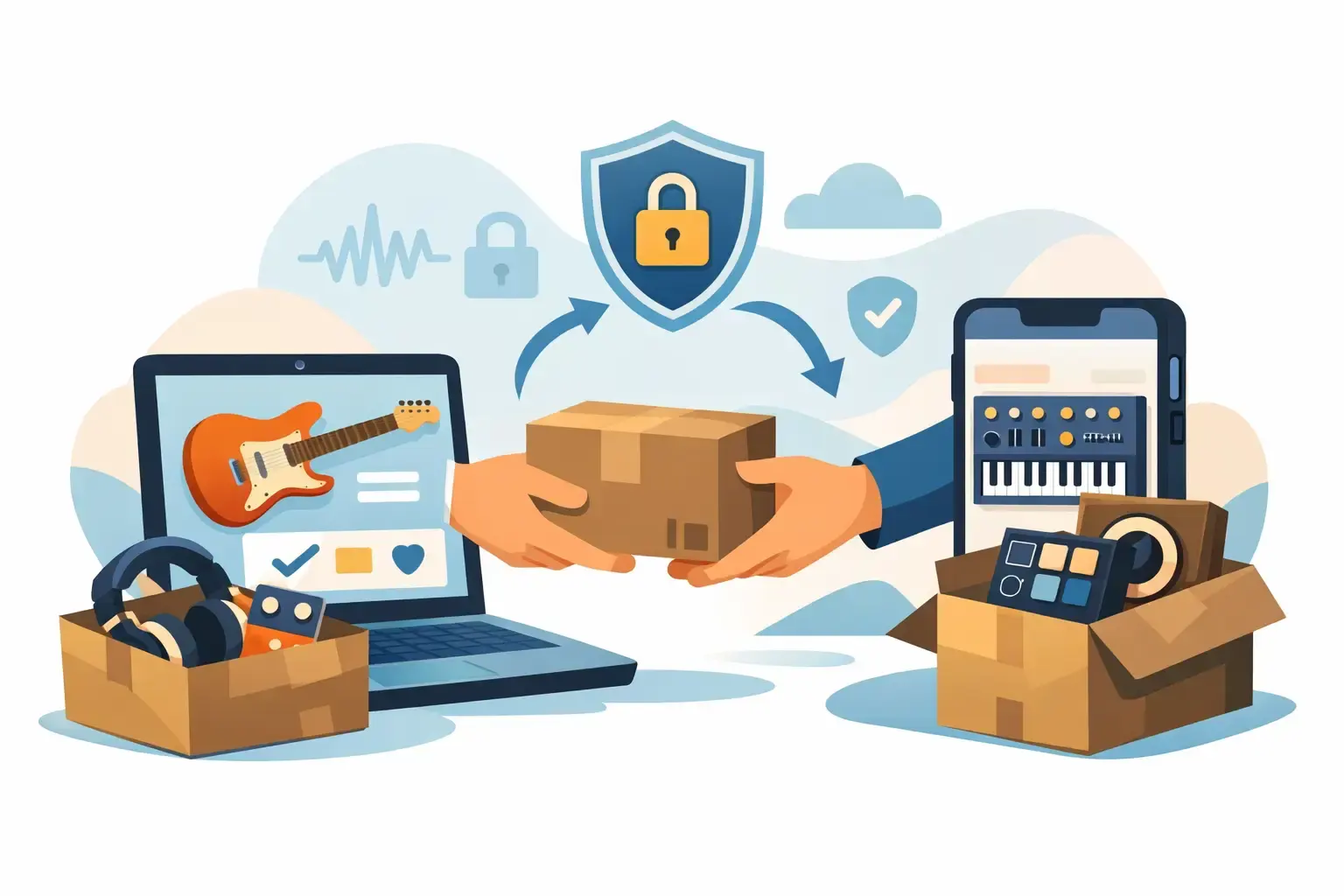
Is Trading Music Gear Safe Online?
Published on June 06, 2026If you’ve ever lined up a gear trade through a classifieds site or a social post, you already know the feeling. The deal looks great right up until the other person stops replying, changes the terms, or shows up with an amp that “works perfectly” except for the loud hum and dead channel. So, is trading music gear safe? Sometimes - but only when the process has real structure behind it.
That distinction matters. Trading a guitar, synth, pedalboard, or interface with another musician can be a smart way to refresh your setup without spending full retail. But a trade is also more complicated than a straight sale. Two items are changing hands, both sides need to ship or meet, both sides need to represent condition honestly, and both people need to follow through. Without safeguards, a trade can go sideways fast.
Is trading music gear safe on peer-to-peer platforms?
The honest answer is that it depends on the platform and the process.
Trading music gear is not automatically unsafe. Musicians make good trades every day. The problem is that many popular marketplaces were built for simple buying and selling, not structured swaps between strangers. That leaves too much room for confusion, pressure, and fraud.
In a cash sale, the basic question is whether the item matches the listing. In a trade, you have that question on both sides. Is the guitar really all original? Does the pedal actually power on cleanly? Was the interface used in a smoke-free studio, or has it lived in a damp rehearsal space for three years? Add shipping, tracking, timing, and communication issues, and the risk multiplies.
That’s why the safest trades are not based on trust alone. They rely on clear terms, verified actions, and accountability if something goes wrong.
What makes a music gear trade risky?
Most bad trades don’t start with obvious red flags. They usually start with small gaps in the process.
One common problem is misrepresentation. A seller might describe a guitar as being in excellent condition while leaving out fret wear, a repaired headstock, scratchy pots, or missing case candy that affects value. Sometimes that omission is intentional. Sometimes it’s just sloppy. Either way, the person receiving the item ends up holding the risk.
Another issue is ghosting. A trade can feel solid during the negotiation stage, then vanish once it’s time to ship. Since both parties are trying to coordinate value, timing, and delivery, even a short communication breakdown can kill the deal.
There’s also the problem of uneven value. Trades often involve gear that does not have a single fixed price. A limited-run pedal, a vintage snare, or a niche synth module may have a wide value range depending on condition and market demand. If that value isn’t agreed on clearly, one side can feel burned before the boxes even arrive.
Shipping adds another layer. Instruments and studio gear are fragile, expensive, and sometimes awkward to pack. A tube amp is not a T-shirt. A synth with broken keys from poor packing can turn a fair trade into an argument overnight.
Then there’s the platform itself. If the trade is arranged through DMs, comment threads, or generic listing sites, there may be no real enforcement at all. No deposit. No delivery confirmation tied to the deal. No reviews that matter. No human support when both people tell different stories.
When trading music gear is actually safe
A gear trade becomes much safer when the system reduces the need for blind trust.
First, both sides need clear listing details. That means accurate descriptions, recent photos, known flaws, and a shared understanding of what is included. Original box, power supply, footswitch, hard case, rack ears - these details matter because they affect both value and expectations.
Second, both sides need visible accountability. Reputation scores, reviews, and transaction history do more than build confidence. They change behavior. People are far less likely to mislead or disappear when their standing on the platform is attached to the outcome.
Third, the trade needs structured terms. A safe exchange is not just “I’ll send my Jazzmaster if you send your Deluxe Reverb.” It should define who is sending what, in what condition, by what deadline, and how the trade is confirmed complete.
Fourth, there should be protection if something fails. If one person never ships, ships late, or sends gear that clearly does not match the listing, there needs to be a process that does more than shrug. This is where deposits, confirmation steps, and dispute resolution make a real difference.
That’s the gap a dedicated marketplace can close. A platform like Bartr is built around music gear swaps specifically, with protections designed for the messier reality of peer-to-peer trading.
The difference between safe and “probably fine”
A lot of musicians have completed trades the old-fashioned way and think, “I’ve done this before. It was fine.” That experience is real, but it can create false confidence.
“Probably fine” usually means the other person seemed normal, replied quickly, had decent photos, and maybe shared a social profile or references. That can work, right up until it doesn’t. The trouble is that informal trust signals are inconsistent. A responsive message thread is not the same thing as transaction protection.
Safe trading is different. Safe means the platform has mechanisms that actively reduce loss. It means there is a record of the agreed terms, proof of shipment and delivery, and consequences if one side does not hold up their end.
That may sound less romantic than a handshake deal between musicians, but it’s a lot better when a $1,200 synth or a vintage amp is involved.
How to judge whether a trade is worth the risk
Before you agree to any swap, ask a few simple questions.
Do you know exactly what you’re getting, including flaws and accessories? Do you know how value was determined? Is there a formal process for shipping and confirming receipt? If the item arrives damaged or misrepresented, is there a real dispute path with a human involved?
If the answer to those questions is no, you are not really evaluating a trade. You are gambling on the other person being honest, organized, and available when things get messy.
That does not mean every informal trade will fail. It means the downside is yours if it does.
For lower-value gear, some musicians are comfortable taking that risk. Trading a basic practice amp for a mid-tier pedal locally is very different from cross-country shipping of boutique gear, vintage instruments, or studio equipment with a lot of moving parts. The higher the value and the harder the item is to verify, the more protection matters.
Practical signs a music gear trade is safer
A safer trade usually has a few things in place from the start. The listing is detailed. Photos are current and specific. The terms are documented, not implied. Both parties have visible reputation data. There is a deadline for shipping, a way to confirm delivery, and a process for disputes.
You should also watch for signs of friction that reveal future problems. Vague descriptions, blurry photos, pressure to move the deal off-platform, refusal to document flaws, or shifting value claims are all warnings. So is anyone who acts offended when you ask reasonable questions about condition or shipping.
Serious traders understand that caution is part of the process. Good gear deserves clear communication.
So, is trading music gear safe?
Yes - trading music gear can be safe, but not because musicians are lucky or because most people mean well. It’s safe when the trade happens in a system built to protect both sides.
That means structure instead of guesswork. Proof instead of promises. Reviews, deposits, delivery confirmation, and real dispute support instead of hoping a stranger follows through because they said they would.
The appeal of trading is obvious. You get to move stagnant gear, try something new, and stretch your budget further. The smart move is making sure the process is as solid as the gear you want in return.
A good trade should feel exciting, not stressful. If the setup leaves you wondering whether your guitar will vanish into someone else’s trunk or whether that “mint” pedal is about to arrive with a dead footswitch, the process is missing something. Trade smarter, protect the swap, and keep the risk where it belongs - low enough that you can focus on the gear, not the damage control.