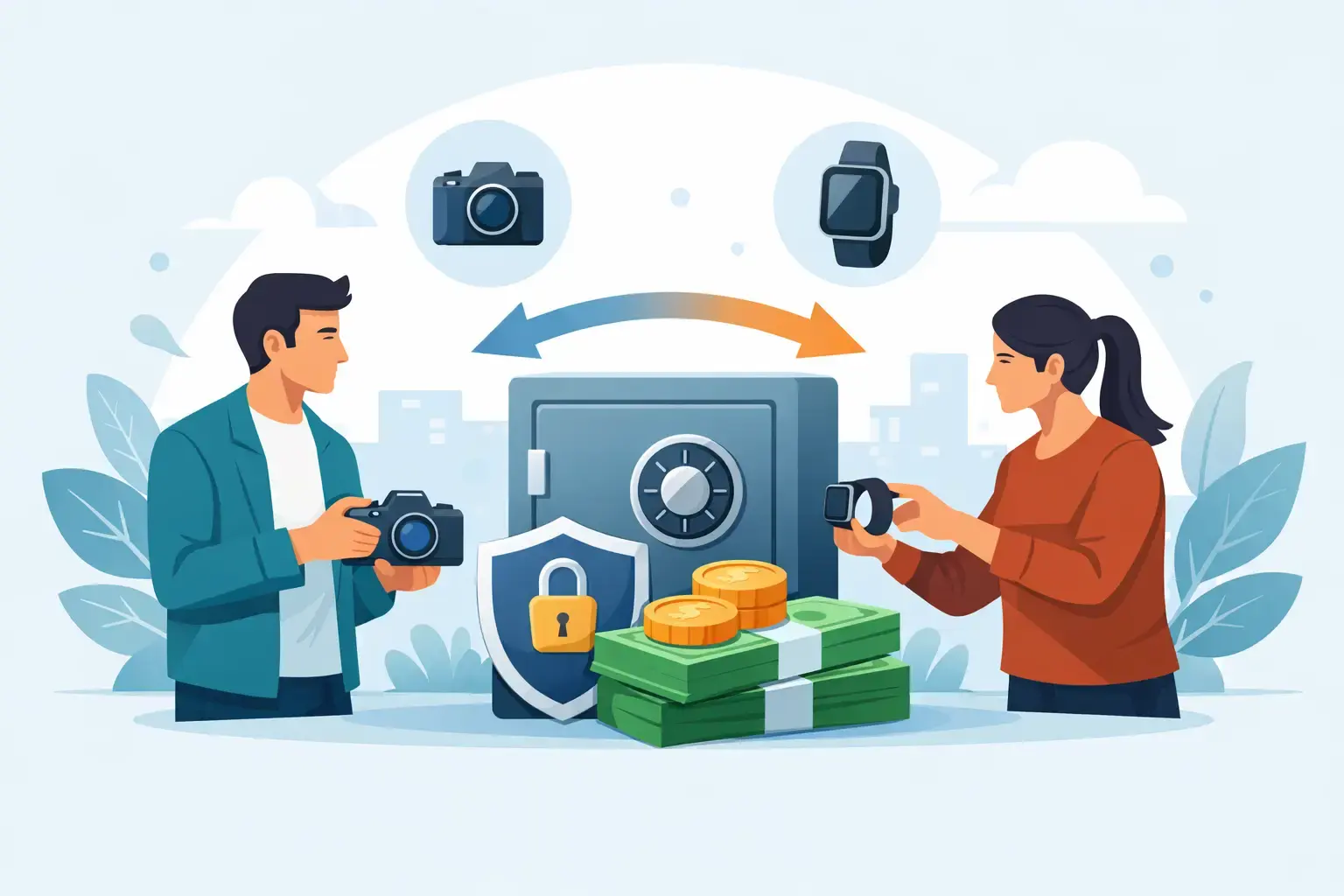
Why a Security Deposit for Item Swaps Works
Published on May 25, 2026Trading a guitar for a synth should feel exciting, not like a coin flip. That’s why a security deposit for item swaps matters so much in music gear trading. When two strangers agree to exchange real value, a deposit adds the one thing informal marketplaces usually don’t have - accountability.
Musicians already know the usual problems. A pedal is listed as mint and shows up with a dead footswitch. An amp gets shipped late, packed badly, or not at all. Someone agrees to a trade, ghosts for three days, then reappears after you’ve already boxed your gear. None of this is rare on generic marketplaces, because most of them treat a gear swap like a casual chat between strangers. That works until it doesn’t.
A deposit changes the stakes. It gives both sides a reason to follow through, communicate clearly, and stick to the agreed terms. It also creates a fair starting point if something goes wrong.
What a security deposit for item swaps actually does
At a basic level, a security deposit for item swaps is money held to support good behavior in a trade. It is not the same as buying the item outright, and it is not a random extra fee. It acts as a layer of protection while the swap is in progress.
If both traders ship on time, send what they promised, and complete the exchange without issues, the deposit is handled according to the platform’s rules. If one side backs out, sends a materially different item, or fails to meet the agreed terms, the deposit helps cover the damage that kind of behavior causes.
That matters more in swaps than in sales. In a straight purchase, the value exchange is simpler: item for cash. In a trade, both sides are sending gear, both sides are taking risk, and both sides need confidence that the other person is serious. A deposit helps balance that.
Why musicians need more than trust and screenshots
Gear traders are not naive. Most people already ask for photos, serial numbers, demo videos, and packing proof. Those steps help, but they only go so far. Screenshots do not stop someone from disappearing. A friendly message thread does not make a stranger accountable. Even a good review history can miss the one bad trade that lands on your doorstep.
Music equipment also brings its own complications. A guitar can have fret wear that does not show clearly in photos. A synth might power on but have flaky outputs. A drum machine can arrive with cosmetic damage that the sender swears was not there before shipping. These are not edge cases. They are normal risks in used gear trades.
That is why a real protection system needs more than vibes. It needs structure. Deposits, confirmation steps, documented terms, and actual dispute handling create that structure.
The real benefit is behavior, not just reimbursement
People often think deposits are only about getting compensated after a bad trade. That is part of it, but the bigger advantage is what happens before anything goes wrong.
When both sides have money on the line, they tend to act differently. They answer messages faster. They disclose flaws more honestly. They ship when they said they would ship. They pack gear with more care. They do not casually agree to a swap and then vanish because a better offer came along.
That behavioral shift is the whole point. A good security system does not just clean up problems. It reduces the number of problems in the first place.
For musicians, that means less time dealing with nonsense and more time actually rotating gear in and out of their setup. If you have ever spent a week negotiating a trade only to have the other person disappear after you sent your tracking number, you already understand the value.
Where deposits help most in gear swaps
Not every trade has the same risk profile. A basic pedal-for-pedal swap is different from shipping a boutique amp across the country. The higher the value, the more a deposit matters.
Deposits are especially useful when the trade involves expensive gear, long-distance shipping, uneven item values, or niche equipment that is harder to replace. They also matter when one or both traders are newer to the platform and do not yet have a long track record.
There is also a simple human factor. Even honest people make sloppy decisions when there is no structure around the trade. They delay shipping. They forget to mention a repair. They assume minor damage is no big deal. A deposit does not make people perfect, but it makes everyone pay closer attention.
What makes a deposit system fair
A deposit only builds trust if the rules around it are clear. If people do not know when it applies, what triggers a dispute, or how decisions are made, the deposit can feel like friction instead of protection.
A fair system spells out the trade terms upfront. That includes the exact items being exchanged, item condition, shipping expectations, delivery confirmation, and what counts as a material mismatch. It should also explain how evidence is reviewed and what happens if one side claims the item was misrepresented.
This is where platform design matters. On a dedicated music gear trading marketplace like Bartr, the deposit is not floating around in a vacuum. It works alongside reputation scores, structured listings, shipment tracking, and human-led dispute resolution. That combination matters because deposits work best when they are part of a full process, not a patch slapped onto an unreliable one.
The trade-offs are real
A deposit is not magic, and it is not free of trade-offs. Some users will hesitate when they see any extra cost or hold placed on a trade. That is understandable. If you are used to informal deals in Facebook groups, a deposit can feel like one more step between you and the gear you want.
But that extra step is often what separates a serious trade from a flaky one. The question is not whether deposits add friction. They do. The better question is whether the friction is useful.
In most cases, it is. A little structure upfront is usually better than a long argument after a bad shipment, a missing item, or a trader who decides the deal no longer works for them after you have already committed.
There is also the issue of proportion. A deposit should match the risk of the trade. Too low, and it does not influence behavior. Too high, and it may scare off legitimate users. Good platforms calibrate that balance instead of treating every transaction the same way.
Why item swaps need different protection than cash sales
Cash sales are familiar. People understand refunds, payment processors, and chargebacks, even if those systems are imperfect. Item swaps are trickier because each side is both buyer and seller at the same time.
That creates more room for confusion. Who ships first? What happens if one box arrives and the other is delayed? What if the pedal you receive technically works but was described as excellent and clearly is not? What if the guitar value was balanced with extra cash and one side disputes the condition after delivery?
A security deposit for item swaps helps stabilize that complexity. It gives the trade a framework. Instead of hoping both people stay reasonable once something feels off, you have a defined process that starts before the boxes move.
That is a big deal for musicians because used gear value is rarely just about retail price. Condition, modifications, original packaging, tubes, firmware, finishes, and market demand all affect how people judge a trade. A structured deposit system does not erase those gray areas, but it helps keep them from turning into chaos.
What to look for before you agree to a swap
If a platform says it protects swaps, look closely at how that protection works. You want clear listing details, documented terms, delivery confirmation, and real dispute resolution by humans who can review context. You also want both sides to have visible accountability through reviews or reputation signals.
Most of all, you want the protection to be built into the trade itself, not left to private messages and crossed fingers. If the system depends on strangers sorting everything out on their own after a problem happens, it is not much of a system.
A good deposit setup should make you feel two things at once: safer and more willing to trade. That second part matters. Protection should not kill the excitement of discovering a better amp, a more inspiring synth, or the pedalboard piece you have been chasing. It should remove the noise that keeps good trades from happening.
The best gear swaps still come down to musicians finding the right exchange at the right moment. A security deposit just makes sure that when both sides say yes, the trade is backed by more than good intentions.