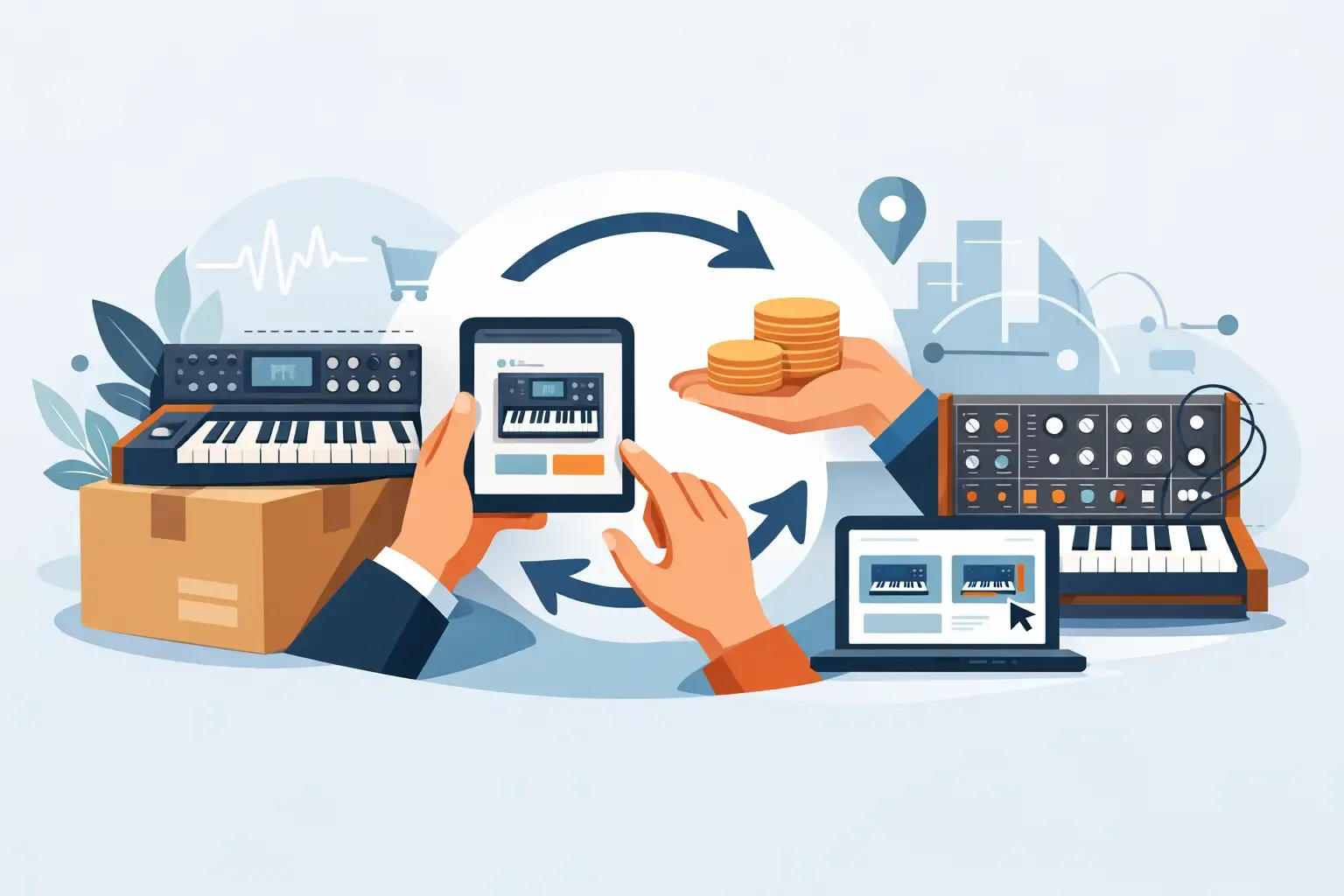
Used Synthesizer Trade Platform: What Matters
Published on July 14, 2026That vintage polysynth on your wish list usually shows up with one catch - the trade itself feels sketchier than the gear. A good used synthesizer trade platform should fix that. Not just by showing listings, but by giving both sides a clear process, real accountability, and fewer ways for a deal to go sideways.
Synth players know the usual mess. A seller says a key is “a little stiff” and you find out later it barely triggers. Someone agrees to a trade, disappears for three days, then comes back asking for cash on top after you already packed your gear. Or worse, both people ship expensive equipment with no structure, no proof, and no realistic backup plan if the item that arrives is not what was promised.
That is the gap a dedicated trade platform is supposed to close.
What a used synthesizer trade platform should actually do
A lot of marketplaces are built for simple buying and selling. Trading is different. With a cash sale, one side sends money and the other sends gear. In a swap, both sides take on risk at the same time. That changes everything.
A used synthesizer trade platform needs to do more than help people find each other. It should make the terms of the exchange clear before anything ships. That includes what gear is being traded, each item’s stated condition, any cash difference, shipping expectations, and what happens if one party does not follow through.
For synth gear, this matters even more because condition is rarely just cosmetic. A rack unit can look clean and still have encoder issues. A drum machine can boot up fine but have failing pads. A keyboard synth might work in a demo video yet arrive with a damaged aftertouch strip, cracked end cheeks, or intermittent output noise. A platform built for this category should expect those risks, not treat them like rare exceptions.
Why generic marketplaces fall short for synth swaps
Generic resale sites are decent at generating listings. They are usually much worse at managing trades. Some barely support swaps at all, which pushes people into side messages, informal agreements, and a lot of crossed fingers.
That is where the familiar problems start. Valuations get fuzzy. Shipping plans are vague. Communication moves off-platform. If someone misrepresents a synth, ships late, or stops responding, there may be no practical system to resolve it.
For musicians, that is not a small issue. Used synths are often fragile, expensive, and hard to replace at the same price. Even common models can vary a lot in value based on condition, included accessories, servicing history, firmware updates, and original packaging. A Juno with replaced sliders is not the same trade as one with original parts and a recent bench check. A modern groovebox with the box, power supply, and clean pads is different from a unit that has seen years of live use.
A platform built specifically for music gear has a better shot at getting those details right because the users expect them and the system is designed around them.
The trust signals that matter most
The biggest feature on any used synthesizer trade platform is not search filters. It is trust.
That trust has to be visible and structured. Reputation scores and reviews help because they give context on whether a user communicates well, ships on time, and describes gear accurately. Structured listings help because they force clearer descriptions than a casual direct message ever will. Delivery confirmation matters because both sides need proof that something was sent and received.
Deposits can matter too, especially in higher-value trades. They create a real incentive for both parties to follow through and reduce the number of flaky agreements that collapse once packing day arrives. That does not eliminate risk, but it raises the cost of bad behavior.
Then there is dispute resolution. This is where many platforms reveal what they really are. If the answer is basically “work it out yourselves,” you are not getting much protection. If there are actual humans reviewing the agreed terms, shipment records, and item descriptions, the platform is doing real work.
That kind of structure is especially valuable with synthesizers because disputes are rarely simple. Cosmetic wear is one thing. Functional disagreements are harder. Was the filter knob always scratchy? Did the sequencer issue happen before shipping or after rough handling in transit? Was the power supply original and compatible? A serious trade platform needs a process for those situations.
What to look for before you trade your synth
If you are comparing options, start with the transaction flow, not the listing count. A marketplace can be full of gear and still be a bad place to trade.
First, check how the platform handles the terms of a swap. You should be able to see exactly what each side is sending, how any value difference is handled, and what condition claims were made before shipment. Ambiguity is where most gear-trade headaches begin.
Next, look at how identity and reputation are handled. Anonymous accounts with no history are not always a deal-breaker, but they should not carry the same weight as users with documented trade activity and solid reviews. If everyone looks equally trustworthy because there is no meaningful record, that is a problem.
Shipping protection is another big one. Synths are not pedals. Packing a desktop module is one thing. Shipping a full keyboard with sensitive controls, old plastic, or wooden side panels is another. A useful platform should support a process where shipment and delivery can be verified. Bonus points if it keeps that information tied to the trade itself rather than buried in private messages.
Finally, pay attention to how the platform handles conflict. If an item arrives not as described, is there a clear next step? Is there a time window for raising an issue? Is there any neutral review of the evidence? Those details matter more than a slick interface.
Why musicians need synth-specific trade structure
Synth people tend to be detail-oriented for a reason. The difference between “works great” and “works great for its age” can mean a lot of money and frustration.
A smart trade setup makes room for those details. It should encourage clear notes about keybeds, knobs, sliders, outputs, MIDI behavior, storage media, battery replacement, calibration, and any repairs or modifications. On vintage units, service history can be just as important as cosmetic condition. On newer gear, it helps to know whether original accessories, licenses, adapters, or expansion cards are included.
This is where a dedicated platform feels different from a general classifieds app. It treats gear condition as part of the transaction, not an afterthought. That does not guarantee every trade will be perfect. It does make misunderstandings less likely and gives everyone something concrete to refer back to.
Safety does not mean friction for the sake of friction
Some musicians hear words like deposits, verification, and structured terms and assume the process will be slow or annoying. That depends on the platform.
Good protection removes the wrong kind of friction. It cuts down on flaky messages, fake urgency, and last-minute changes. It gives serious traders a cleaner path to a real deal. You spend less time wondering if the other person will vanish and more time deciding whether the trade itself makes sense.
There is always a trade-off. A more structured platform may feel less casual than meeting someone through a forum thread or social post. But casual is not the same as easy once a $1,200 synth goes missing or arrives damaged with no agreed process in place.
That is why a platform like Bartr makes sense for musicians who want the upside of peer-to-peer trading without the usual gamble. Built-in protection is not extra. It is the part that makes the trade usable.
The best platform is the one that makes both sides accountable
A used synthesizer trade platform should not ask you to trust strangers blindly. It should give both sides a reason to act like reliable trading partners.
That means clear terms, visible reputation, verified shipment milestones, and a real path for dispute handling when something is off. It also means designing the experience around gear swaps, not forcing trades into a system meant for simple cash sales.
If you are trading synths online, the goal is not just to find a match. It is to finish the trade with the gear you expected, in the condition you agreed to, without spending the next week chasing messages or filing complaints into a void.
The right setup makes that feel normal instead of lucky. And when you are shipping instruments with history, quirks, and real value, that is the standard worth holding onto.